The short answer
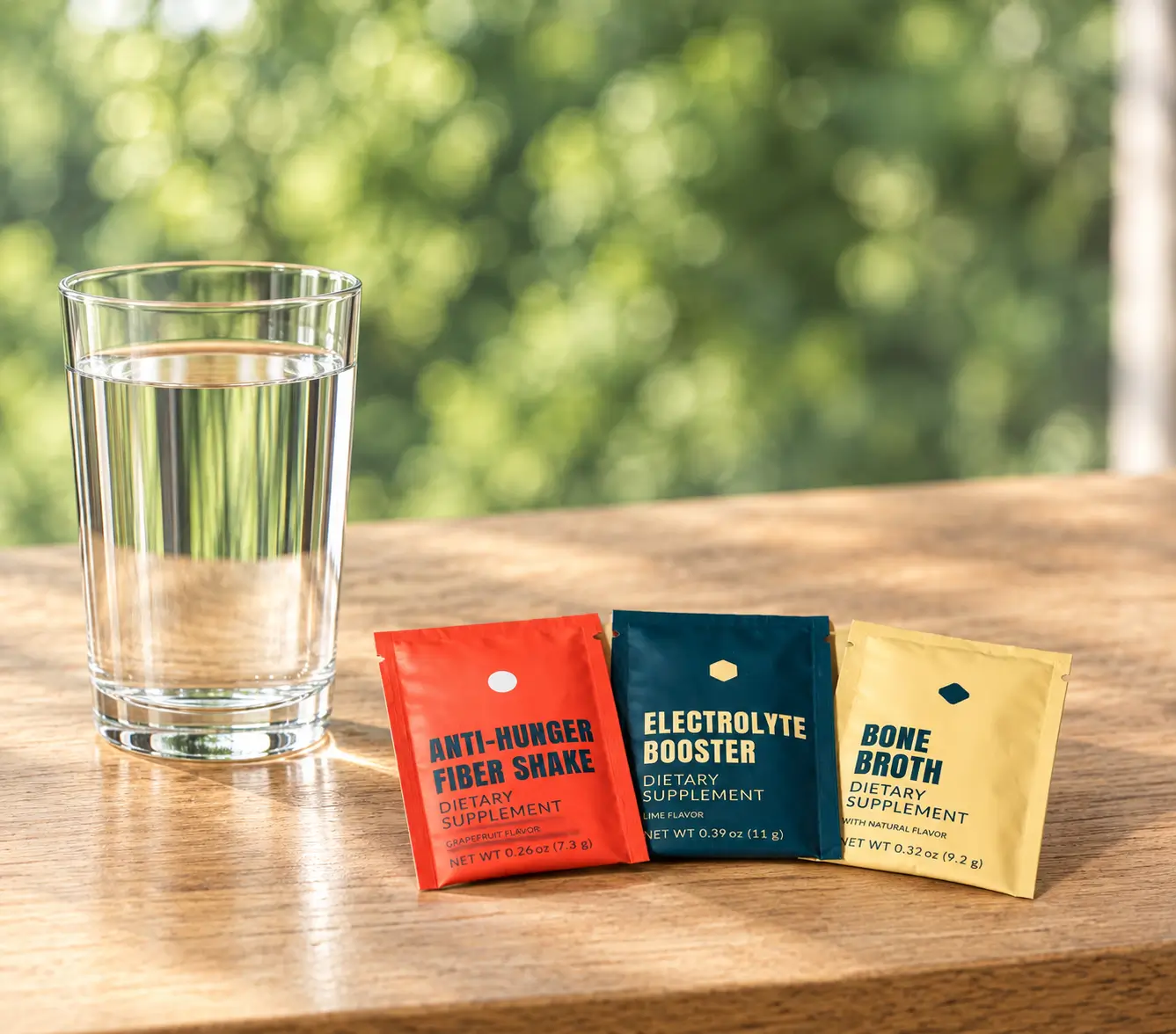
A water fast and a Burnbox fast put your body in the same fasted state, and they lose about the same amount of fat. The difference is how the three days feel. A water fast gives you nothing but water; Burnbox adds measured electrolytes, a psyllium fiber shake and an evening bone broth for roughly 100 calories a day, aimed at the three reasons people most often quit a water fast: the day-2 headache and dizziness, hunger waves, and long evenings.
The question isn't "which one is a real fast?"
Both are. Water fasting is the purest version: nothing goes in but water, and it costs nothing. It's also the version a lot of people don't finish.
Ask anyone who has tried. Day 2 brings the headache, the head rush when you stand up from the couch, and the 8 p.m. stare into the fridge while the kids eat leftovers. None of that is dangerous for most healthy adults, but every one of those moments is a reason to stop.
So the better question is: which three days will you actually complete, safely? Here's an honest side-by-side, including the places where water wins.
Water fast vs Burnbox at a glance
The same destination, two different routes:
| Comparison | 3-day water fast | 3-day Burnbox fast |
|---|---|---|
| Calories per day | 0 | About 75 |
| Fasted, fat-burning state after about 24 hours | Yes | Yes |
| Sodium and potassium | None unless you add them | Measured in each Electrolyte Booster: about 640 mg sodium, 820 mg potassium |
| Help with hunger | None | Psyllium and flax Fiber Shake |
| Evenings | Water or herbal tea | Hot chicken bone broth, 3 g protein |
| Plan | You write your own | One box level per day, journal times each packet |
| Cost | Free | Kit price [VERIFY current price] |
| Fat lost over 3 days | About 1–2 lb | About 1–2 lb |
For the dose and calories behind each row, see what's in each Burnbox sachet.
What stays the same on both routes?
Your body goes through the same metabolic shift either way. Over roughly the first day, it uses up glycogen, the carbohydrate stored in your liver and muscles. Insulin falls, and your body burns more fat and starts producing ketones for fuel. That much is well established.
That shift doesn't need zero calories. It needs very few calories and very little carbohydrate. About 100 calories a day, mostly fiber with a little protein and fat, keeps you in the same state. In practice, the difference between 0 and 100 calories a day is under 0.1 lb of body fat over three days.
What's actually different?
1. Electrolytes: the biggest difference
On a water fast you take in no sodium or potassium, while your kidneys release more sodium than usual as insulin drops. That combination is the likely driver behind the most common water-fasting complaints: headaches, cramps and orthostatic hypotension, the dizzy head rush when you stand up quickly. Drinking more plain water doesn't fix it and can dilute sodium further. More on this in why electrolytes matter more than water during a fast.
Burnbox includes a measured Electrolyte Booster every day. Many experienced water fasters add salt or electrolytes themselves for exactly this reason, so on this point the two routes end up closer than they look.
2. Hunger
Water fills your stomach for a few minutes, then you're back where you started. The Fiber Shake uses psyllium, a soluble fiber that forms a gel and slows stomach emptying. In a small trial taken before meals, psyllium reduced hunger and increased fullness. Whether it does the same during a fast hasn't been studied directly, so treat it as promising, not proven.
3. Evenings
For most people, dinner is the hardest habit to skip, especially with a family at the table. A water fast leaves an empty slot at 7 p.m. Burnbox puts a hot, savory chicken bone broth there. It's a ritual more than a nutrient, and it gives the evening a shape.
4. A plan you don't have to write
A water fast is self-directed: you decide when to drink, how to handle day 2 and how to break it. Burnbox gives you one box level per day and a journal that times each packet. Breaking a fast with a heavy meal is one of the most common mistakes on either route; here's how to break a 3-day fast without undoing your work.
Where water fasting wins
Water fasting has real advantages, and you should know them before you pay for anything:
- It's free. No kit, no shipping, nothing to buy.
- It's the simplest. One rule. Nothing to mix or remember.
- It's the strictest. If you want a true zero-calorie fast, for personal, religious or experimental reasons, only water gets you there.
- You can start today. No waiting for a delivery.
If you've done multi-day fasts before, you know how your body reacts, and you're comfortable managing your own sodium, potassium and magnesium, a water fast with added electrolytes can work well for you.
How sure can we be?
Established: both routes move you into a fasted, fat-burning state within about a day, and both lose a similar amount of fat over three days.
Established: low sodium intake plus falling insulin explains many common fasting side effects, such as headaches and lightheadedness.
Emerging: psyllium increases fullness when taken with meals; it hasn't been studied during a fast.
Not shown: that water fasting triggers "deeper autophagy" than a near-zero-calorie fast in humans. Most autophagy evidence comes from animal studies, so we don't claim either route does more of it.
Which one fits your life?
A water fast probably suits you if you're an experienced faster, you already handle electrolytes yourself, and you want the simplest or strictest version.
A Burnbox fast probably suits you if it's your first multi-day fast, you've tried water before and quit on day 2, your evenings are your weak spot, or you'd rather follow a plan than build one. That describes most people over 40 starting out: a full calendar, a job, maybe kids or parents to look after, and no wish to become a fasting expert first.
Either way, the fat loss is about the same. The difference is whether you reach day 3. For realistic numbers, see how much weight you can lose in 3 days.
Who shouldn't do either
Don't do a multi-day fast on either route without medical supervision if you're pregnant or breastfeeding, under 18, take insulin or other blood-sugar-lowering medication, take blood pressure medication or diuretics, have kidney or heart disease, or have a history of an eating disorder. Stop and get help if you faint, have chest pain or palpitations, or feel confused. The full list is in who shouldn't do a 3-day fast.
Prefer the guided route?
Same fasted state, fewer reasons to quit. The kit gives you a measured Electrolyte Booster for day 2, a Fiber Shake for the hunger waves and a hot broth for the evenings, plus a plan for all three days. See the 3-day kit
FAQ
Is a Burnbox fast a real fast?
Yes, in the sense that matters for most people. At under about 100 calories a day with very little carbohydrate, your body stays in a fasted, fat-burning state. It isn't a strict zero-calorie water fast.
Do you lose more weight water fasting?
Not meaningfully. The roughly 100-calorie difference per day adds up to under 0.1 lb of fat over 3 days. See how much weight you can realistically lose in 3 days.
Can I just add salt to my water instead?
You can, and it helps with sodium. Salt alone doesn't add potassium or magnesium, and it does nothing for hunger or evenings.
Is a 3-day water fast safe?
For most healthy adults, a 72-hour water fast is generally considered tolerable, but side effects like dizziness and electrolyte imbalance are common, and some people shouldn't do it at all (see above). Longer fasts need medical supervision.
Which is easier for a first fast?
Most first-timers find a structured fast with electrolytes, fiber and an evening broth easier to complete than water alone.