
The short answer
The day-2 headache usually isn't hunger. When you fast, falling insulin tells your kidneys to release more sodium, and water and other minerals go with it. Plain water replaces the fluid but not the minerals, so drinking more of it can dilute what's left. That's why electrolytes, especially sodium, potassium and magnesium, are often the difference between a fast that feels manageable and one that ends early.
The day-2 headache, explained
Ask anyone who's done a 3-day fast about day 2 and you'll hear the same story: a dull headache, feeling flat or foggy, a head rush when you stand up from your desk. Most people blame hunger or low blood sugar and reach for another glass of water.
Often, though, the real cause is salt. And another glass of water is the wrong fix.
Why does fasting drain your electrolytes?
Fasting makes your body lose sodium faster than usual, mainly because insulin drops. Scientists have documented this since the 1960s and call it the natriuresis of fasting: natriuresis just means passing sodium in your urine. Here's how it works:
- Insulin normally helps your kidneys hold on to sodium. After a meal, higher insulin signals the kidneys to keep salt. When you fast, insulin falls, so your kidneys let more sodium go, and water follows it out. More on what happens to insulin during a fast.
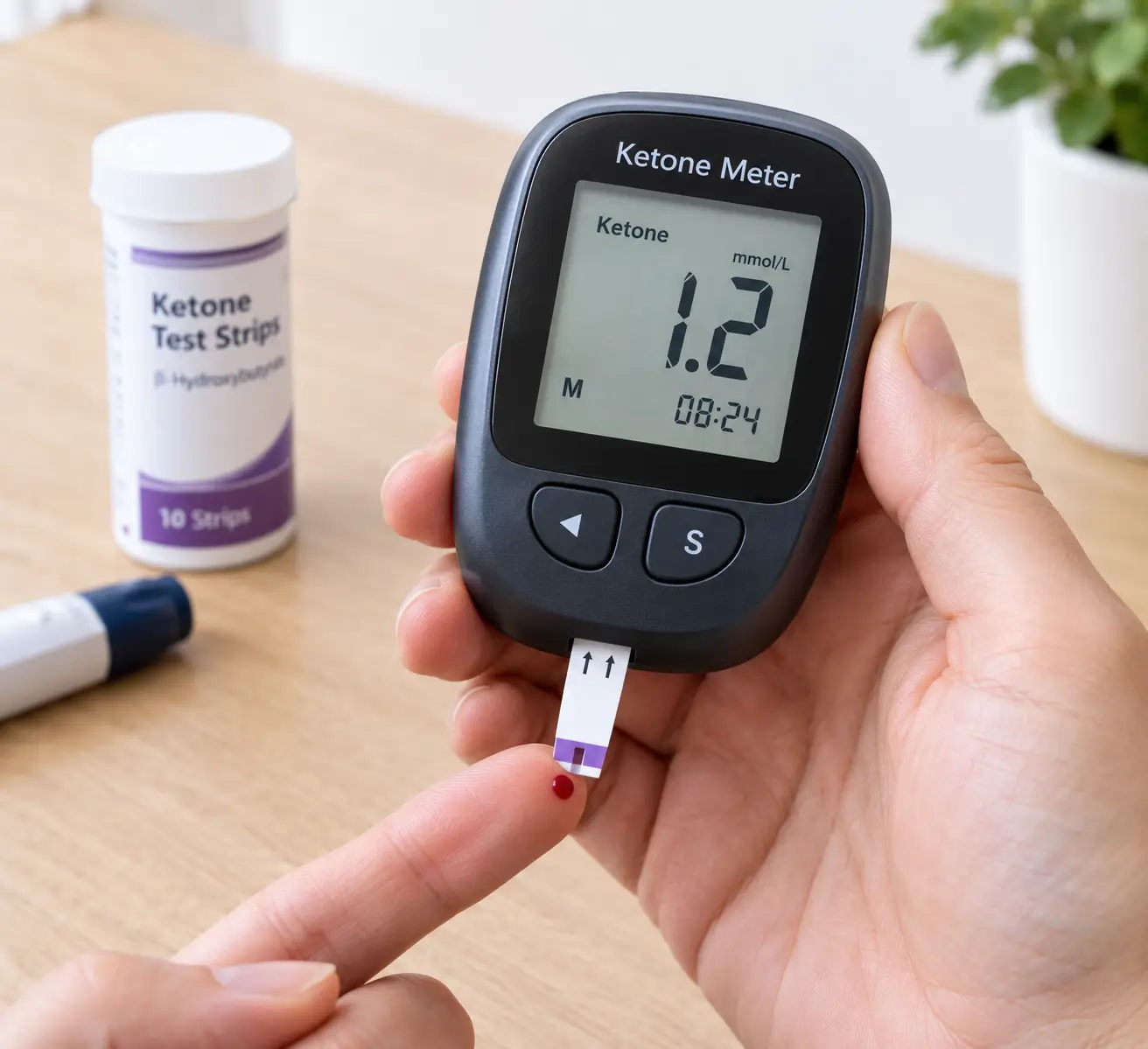
- Ketones add to the effect. As your body makes more ketones, some are passed in urine, and sodium tends to leave with them. Here's how ketones build up over 3 days.
- You stop eating your usual salt. Most sodium in a typical diet comes from food. During a fast, that source disappears overnight.
This is also why the scale drops so quickly in the first days of a fast: much of it is salt and water, not fat. See how much of early weight loss is water.
The three electrolytes that matter most during a fast
Electrolytes are minerals that carry an electrical charge. They control how fluid moves in and out of your cells and let your nerves and muscles fire properly. Three matter most during a fast:
| Electrolyte | What it does | Why it matters when fasting | In one Burnbox Electrolyte Booster |
|---|---|---|---|
| Sodium | Keeps fluid in your bloodstream; supports blood pressure and nerve signals | The one you lose fastest. Low sodium is a common cause of headaches, fatigue and dizziness | About 640 mg |
| Potassium | Regulates heartbeat and muscle contraction | Your body draws on stores during a fast; low levels can cause weakness or cramps | About 820 mg |
| Magnesium | Supports muscles, nerves and energy production | Many adults already eat less than recommended; low levels are linked to cramps and poor sleep | About 140 mg |
Sodium does most of the heavy lifting in the first few days. Potassium and magnesium matter too, and become more important the longer a fast goes on.
Why more water isn't the answer
Water still matters during a fast. But when your sodium is already running low, drinking large amounts of plain water dilutes what's left in your blood. In extreme cases this leads to hyponatremia, a dangerous drop in blood sodium. That's rare in a 3-day fast, but the milder version is common: you drink more, feel worse, and assume you need to drink even more.
Signs your electrolytes are running low
These symptoms are common during a fast and often linked to low sodium or other minerals. They can have other causes too, so treat them as signals, not a diagnosis:
- Headache, especially on day 2
- Tiredness or feeling "flat"
- Dizziness or lightheadedness when you stand up
- Muscle cramps, particularly at night
- Heart palpitations or a racing heart
- Brain fog or irritability
Stop the fast and get medical help if you faint, have chest pain, feel confused, have severe weakness or an irregular heartbeat.
How to keep your electrolytes balanced over 3 days
- Start before you start. Don't cut salt the day before your fast. Going in well hydrated and well salted makes day 1 easier; more in how to prepare for a 3-day fast.
- Spread electrolytes through the day. Small amounts across the day tend to feel better than one big dose. Many people find the afternoon of day 2 is when they need them most.
- Use a balanced mix, not just salt. Sodium matters most, but a formula that also includes potassium and magnesium covers the other gaps.
- Count your broth. A savory broth adds sodium and makes the evening feel less like deprivation.
- Watch the sweeteners. Many sports drinks are full of sugar, which works against a fast. Look for electrolytes made for fasting, with little or no sugar.
From the Burnbox community: [ADD: real customer quote about the day-2 headache before and after using electrolytes, used with permission, with the name or initials they approved]
Why this matters more after 40
If you're in your 40s or 50s, there's a better chance you take something that affects sodium or potassium, like a blood pressure pill or a water pill. That doesn't automatically rule out a fast, but it does mean electrolytes aren't a do-it-yourself job: check the section below and talk to your doctor before you start.
How sure can we be?
Established: falling insulin during a fast increases sodium and water loss through the kidneys.
Established: low sodium is a common cause of headaches, fatigue and lightheadedness while fasting.
Supported by older studies: ketone excretion adds to sodium loss.
Experience, not a study: most people feel noticeably better on day 2 with electrolytes. It's what customers report most, and it fits the physiology.
Who should check with a doctor first
Electrolytes aren't risk-free for everyone. Talk to your doctor before fasting or adding electrolyte supplements if you:
- Have kidney disease, heart failure, or high blood pressure managed with medication
- Take diuretics (water pills), ACE inhibitors, ARBs or other drugs that affect potassium or sodium
- Take insulin or other diabetes medications
- Are pregnant, breastfeeding, under 18 or have a history of eating disorders
The full list is in who shouldn't do a 3-day fast.
Built for day 2
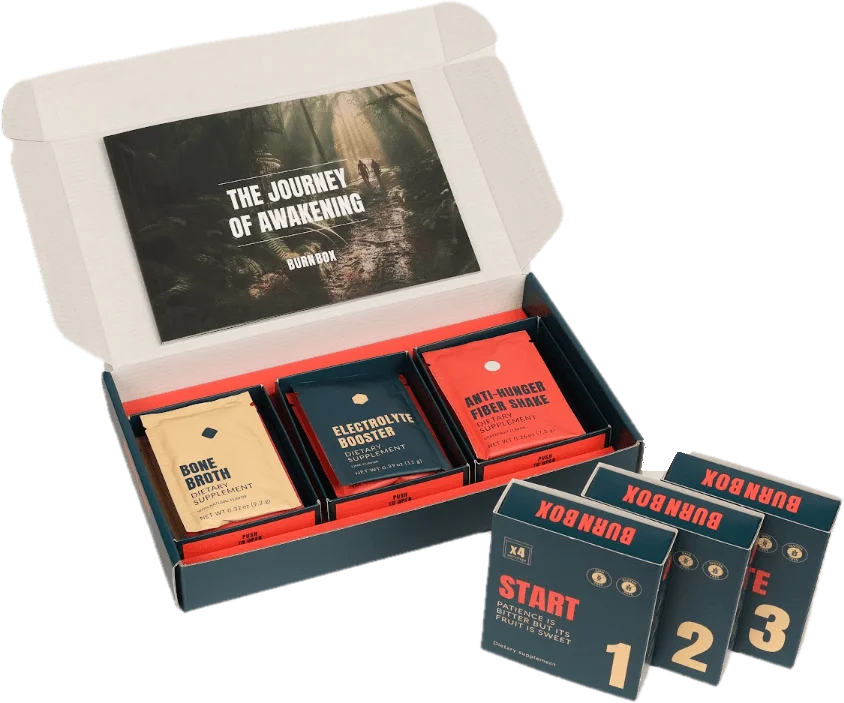
The Burnbox kit takes the guesswork out of salt ratios. Each day's lime Electrolyte Booster gives you about 640 mg sodium and 820 mg potassium, plus magnesium, calcium and phosphorus, for roughly 15 calories. The evening chicken bone broth adds a little more sodium and something warm to look forward to. Here's what's in each sachet, or see the 3-day kit.
FAQ
Do I need electrolytes during a 3-day fast?
Most people feel noticeably better with them. Fasting increases sodium loss through the kidneys, and you're no longer getting minerals from food, so a 3-day fast without electrolytes often leads to headaches, fatigue and dizziness.
Do electrolytes break a fast?
Plain electrolytes (sodium, potassium, magnesium) have no calories and don't raise insulin, so they don't break a fast. Many sports drinks do, because they contain sugar.
Can I just add salt to my water?
Salt covers sodium, which is the most important one in the short term. It doesn't cover potassium or magnesium, so a balanced electrolyte mix is the more complete option.
How much water should I drink while fasting?
Drink to thirst and watch your urine color: pale yellow is a good sign. Forcing large amounts of plain water without electrolytes can dilute your sodium further.
Why do I get a headache when fasting?
The most common causes are low sodium, caffeine withdrawal and dehydration. Electrolytes and, if you're a coffee drinker, cutting back gradually before the fast both tend to help.