
Short answer
By day 3 of a fast, most people's bodies have switched to running mainly on fat and ketones, and the day-2 dip (often low sodium plus the fuel switch) has passed. A 2025 review of 71 studies found healthy adults think just as well fasted as fed, so the "clarity" isn't a superpower. It's the absence of the fog, plus a quieter, simpler day. Both are real.
The day-3 shift people describe
Ask people who've finished a 3-day fast what day 3 felt like, and the words repeat: lighter, calmer, focused, "like someone turned the volume down." That's often after a day 2 that felt the opposite: headachy, flat, irritable.
That contrast is part of the story. Feeling clear on day 3 is partly feeling normal again after a hard day, and partly something new. Both are worth understanding, because knowing what's happening makes day 2 easier to get through.
What's happening in your body by day 3
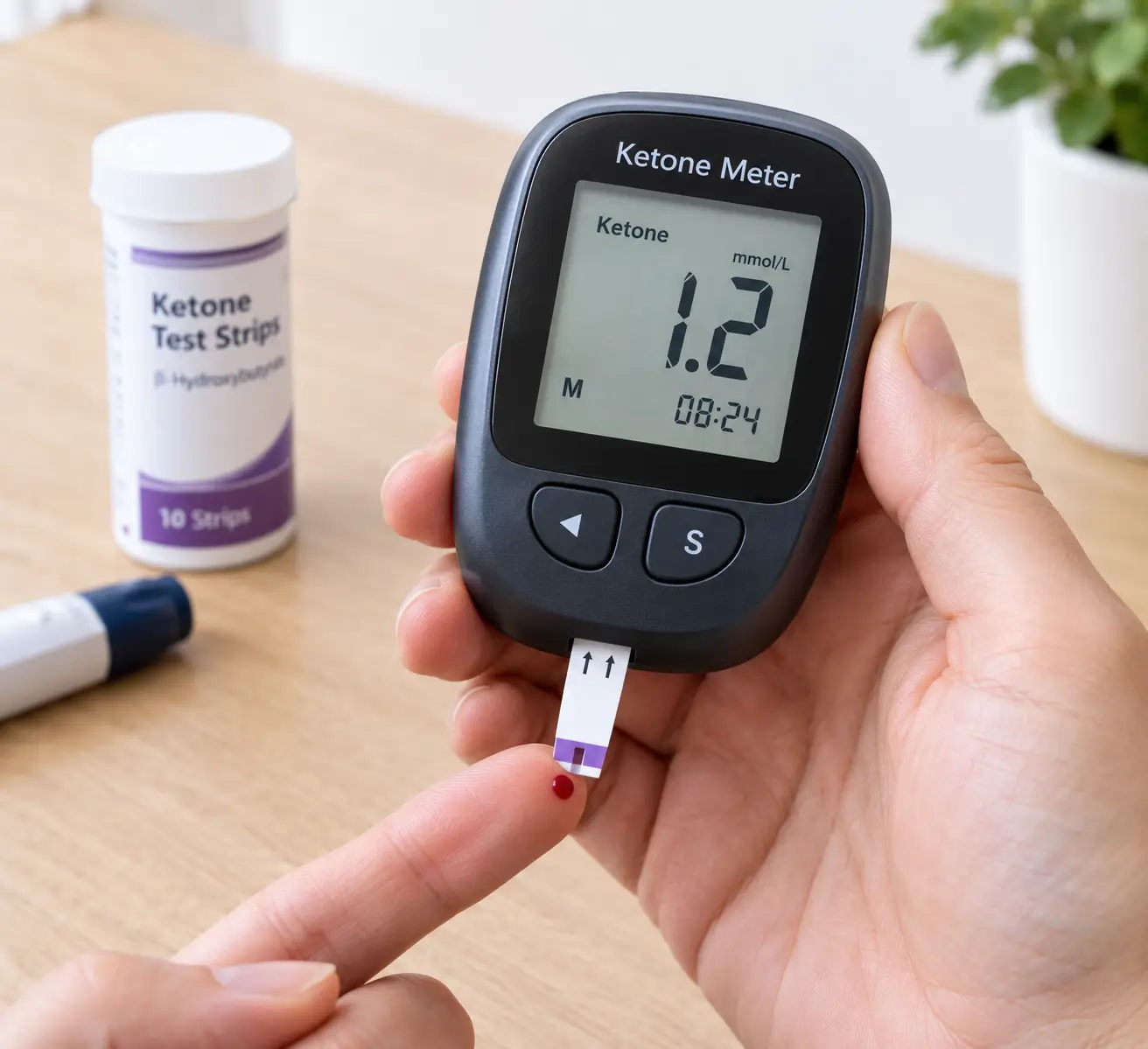
On a normal eating day, your brain runs mostly on glucose. During a fast, the liver's stored glucose (glycogen) runs low over the first day or so. The body then switches fuel sources: it breaks down fat and the liver turns part of it into ketones, which the brain can use as fuel.
Here's how sure we can be about each piece:
| How sure | What we can say |
|---|---|
| Established | the fuel switch happens, and the brain uses ketones when glucose is scarce. |
| Emerging research | researchers think ketones may give the brain a steadier energy supply once the switch is done. The 2025 review found the gap between fasted and fed performance got smaller in longer fasts, and suggested ketones as one possible reason. |
| Not established | that fasting makes you smarter, sharper than your baseline, or "rewires" your brain. There's no good evidence for that in a 3-day fast. |
What the research actually says about fasting and focus
The biggest study on this so far is a 2025 meta-analysis led by researchers at the University of Auckland. It pooled 71 studies, almost 3,500 people and tests going back to 1958. Healthy adults scored about the same on attention, memory and planning tests whether they had eaten or not.
Three details matter for a 3-day fast:
| # | Detail | What it means |
|---|---|---|
| 01 | Time of day | Fasted people did slightly worse when tested later in the day, as if fasting deepens the natural afternoon dip. That matches what many people feel around 3–5pm. |
| 02 | Food cues | Performance slipped on tasks involving food. Hunger doesn't fog your whole brain; it pulls your attention toward food. |
| 03 | Age | Children and teens did worse when fasting. This is one reason fasting is an adult practice (see who shouldn't do a 3-day fast). |
So the honest summary: fasting doesn't usually hurt clear thinking in healthy adults, and it may feel better once you're past the switch. Feeling sharper is real as an experience. As a measurable boost, it isn't proven.
The mind side: why it feels so clear
Some of day-3 clarity has nothing to do with ketones. These are plausible, everyday explanations, not lab findings:
Fewer decisions. No planning meals, no snacking, no "what's for lunch." Many people are surprised how much mental space food takes up.
No post-meal slump. The heavy, sleepy feeling after a big lunch simply doesn't happen.
A sense of control. You did something hard and you're still standing. That confidence feels like clarity.
Attention turns outward. Once hunger quiets down, which for many people happens after day 2, the food "noise" fades.
This is the mind-body link in practice: a physical change (steady fuel, no food rhythm) and a psychological one (fewer decisions, a sense of achievement) arriving on the same day.
Why some people don't feel it
Not everyone gets a clear day 3. The usual reasons are practical:
- Low sodium. Fasting makes your kidneys release more salt. If you've been drinking only water, the fog may be the day-2 headache still hanging on.
- Caffeine withdrawal. Stopping coffee abruptly can cause headaches and fog on its own.
- Poor sleep. Some people sleep lighter while fasting, and a bad night shows the next day.
- High stress or a demanding day. Back-to-back meetings on day 3 aren't a fair test.
How to give yourself the best chance of a clear day 3
- Keep your electrolytes up, especially sodium, spread through the day.
- Taper caffeine in the days before, rather than quitting on day 1.
- Plan your hardest thinking for the morning, since the afternoon dip is when fasting is felt most.
- Keep day 3 lighter if you can: a walk, not a workout.
- Expect day 2 to be the hard one. Knowing it passes is half of getting through it.
If you feel confused, very weak, faint, or your heart is racing, that's not "brain fog." Stop and read what's normal and what isn't.
Where Burnbox fits
The most common reason people quit before the clear day arrives is day 2. Burnbox is built around that: a lime Electrolyte Booster with sodium, potassium and magnesium, grapefruit fiber shakes for hunger, and a warm chicken bone broth each evening. You can piece together the same idea yourself; the kit just means you're not measuring salt at 4pm on day 2. See what's in the kit →
FAQ
Is mental clarity during fasting real?
As an experience, yes, many people report it, especially around day 3. In tests, healthy adults think about as well fasted as fed. The clarity is better described as no fog than as a boost.
Why do I feel foggy on day 2 but clear on day 3?
Day 2 is usually when glycogen runs low, sodium drops and the body is mid-switch. By day 3 the switch is mostly done and many people have adjusted.
Do ketones make you smarter?
There's no good evidence they do. Ketones are a usable brain fuel and may help keep performance steady, but that's not the same as an upgrade.
When should I not trust the "clear" feeling?
If you feel unusually euphoric, dizzy or detached, or have trouble concentrating on simple things, treat it as a warning sign, not a benefit.